Re-Branding OFOS

Standard

When I created this blog over four years ago, I had no idea what I was doing. Frankly, I was bored on a Saturday morning back in April 2011, and thought it’d be cool to start a blog.

I’ve had this blog for over four years now, and in that time, I’ve used this space primarily as a platform to share my thoughts on a variety of topics: everything from self-motivation, to marketing, to goal setting, to of course my favorite topic: travel. Since then, I’ve seen friends and countless others start blogs, then completely take their website offline just months later. Given that, I’m honestly quite surprised that I still keep this blog up and running, even after all these years of sporadic posting.

As I think about what I’d like to use OFOS for going forward, I’m hoping to be more purposeful with this blog. Rather than using it really as a public diary, my goal is to transform this little space on the interwebs that I call my blog to a resource for those looking to travel more, spend less, and still keep their full-time job.

I hope to do that by focusing on a few things where I can bring a unique perspective based on travel style, which can generally be defined as:

  • Traveling as a solo male, though more recently have started traveling with others
  • Preferring to travel 4-5 days at a time, rather than taking several weeks off
  • Travelling generally during the off-season whenever possible to avoid the crowds
  • Taking pictures, though not with any fancy camera; my iPhone6 will
  • Traveling frugally, though I’ll happily burn my miles and points to enjoy an amazing flight or hotel experience
A scene from my first ever solo travel experience: the rice terraces of Longsheng, Guangxi, China

A scene from my first ever solo travel experience: the rice terraces of Longsheng, Guangxi, China

I also realize that there are A TON of people in the DC area that love to travel, and so my goal is to also make this blog more DC-centric, such as by integrating my other website, DCMetroTrip into this blog, to provide more tips and ideas on how to travel more, even if it’s just a few stops away on the Metro.

Alright, so there you have it. I’m looking forward to refocusing this blog from just a jumbled up mess of thoughts into something more useful and relevant. Hope you’ll follow me along on my new(-ish) journey!

How to Travel More, Spend Less, and Keep Your Full-Time Job

Standard

Over the past few months, I’ve gotten questions from friends and acquaintances on how I’m able to travel so much while still having a full-time job. I’m by no means an expert at what some term “travel hacking,” but here are some helpful tips and tricks that I think anyone can adopt to start traveling more and spending less, all while keeping their full-time job.

Tip #1: Find a workplace that values travel and offers a generous vacation policy.
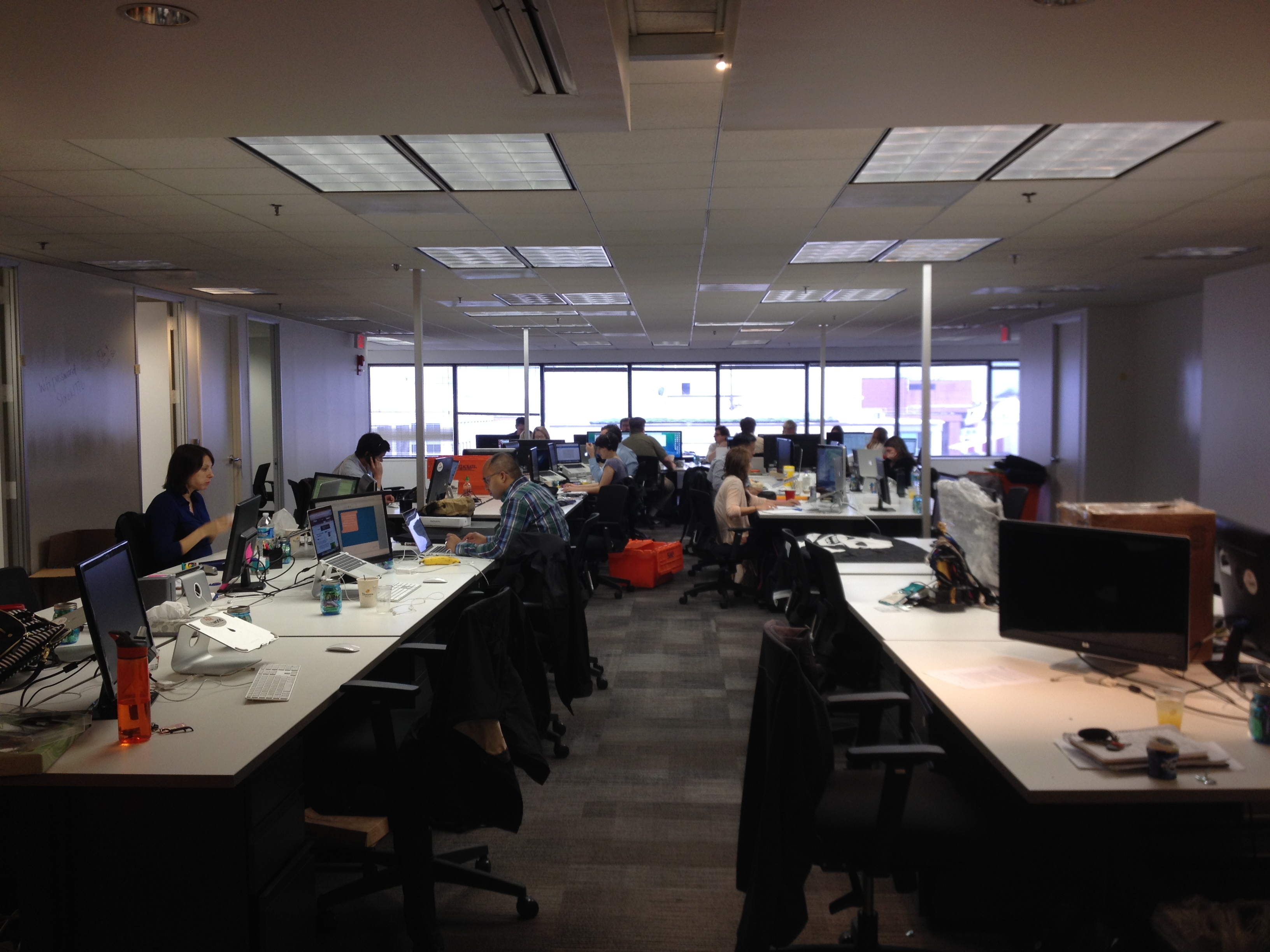
My old office, near Dupont Circle in DC.

My old office, near Dupont Circle in DC.

Although two weeks of paid time off (PTO) is typically the norm for most workers in the U.S., there are many businesses across the country that offer vacation policies that are much more generous than the standard. If you’re on the job market or currently exploring new opportunities, be sure to get as much clarification as possible on the vacation policy from your future employers. Aside from asking how much PTO your potential employer provides, I’d suggest asking these other questions to get a better sense of how much your potential employer values vacation time:

  • How often do people generally take vacation at this company?
  • Are there any “blackout” periods where vacation is generally frowned upon?
  • How many days, if any, can you roll over from a previous year?
  • What’s the company’s policy regarding leave without pay?

These questions have greatly helped me understand how flexible a company is with regard to personal travel. Moreover, it’s important to get a sense of what your prospective boss’ and team’s viewpoints are towards travel. For instance, you might come across a company that offers extensive vacation time, but your boss and immediate team might frown upon time off. Conversely, you might be at a firm that offers limited time off, but might be on a team and have a boss that’s more flexible with your travel goals.

In my case, these questions have helped me identify and work for companies that highly value vacation, offering me anywhere from 15 days of paid time off (my current employer) to one that offers an open vacation policy (my previous employer).

Tip #2: Plan ahead in order to combine federal holidays with paid time off.
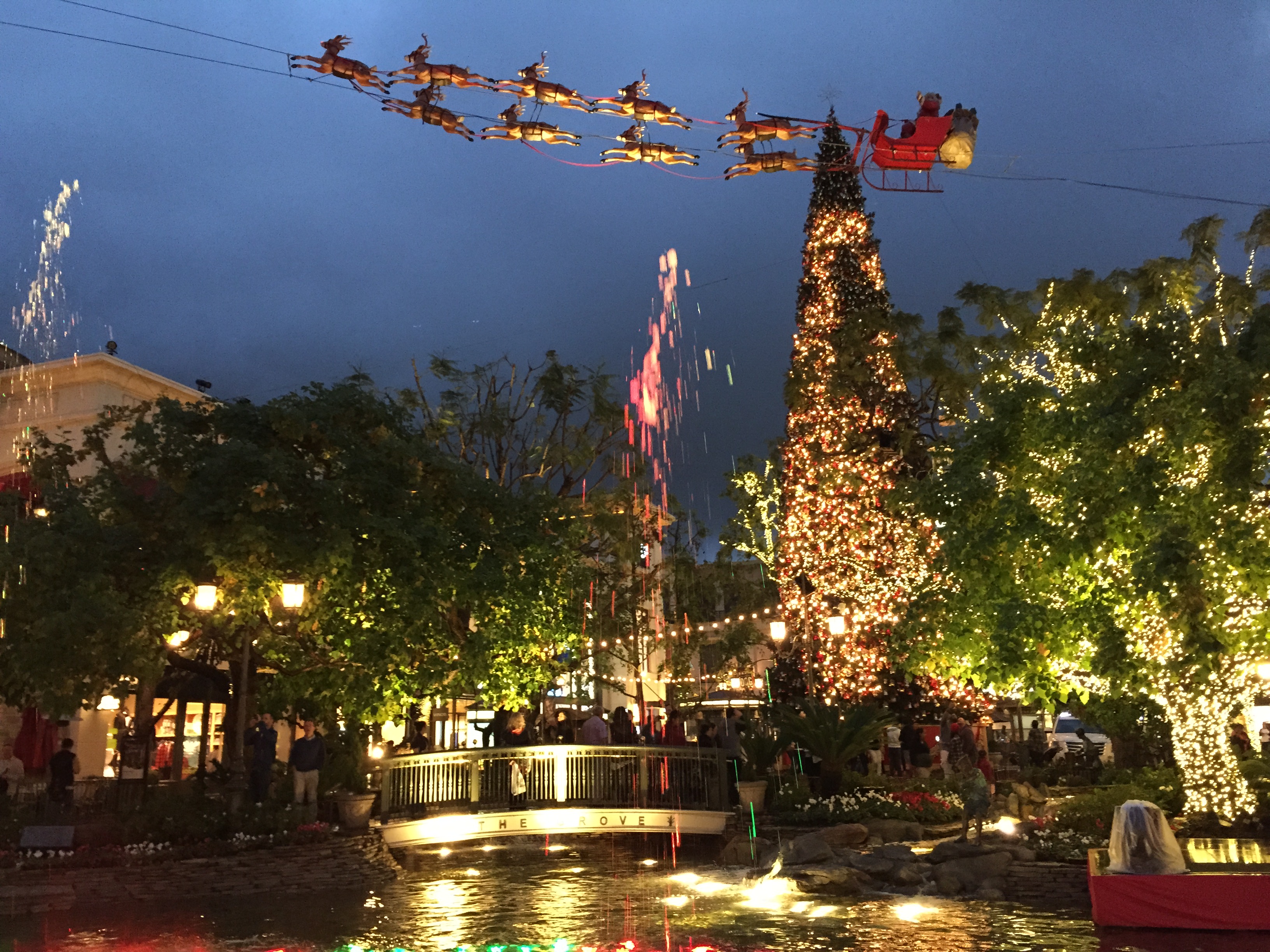
Hanging out at the Americana at Brand in Glendale with my family over Christmas 2014.

Hanging out at the Americana at Brand in Glendale with my family over Christmas 2014.

Most employers recognize most federal holidays. In 2015, there were 10 of them :

  • January (2 days: New Years Day & MLK Day)
  • February (1 day: Presidents Day)
  • May (1 day: Memorial Day)
  • July (1 day: Independence Day)
  • September (1 day: Labor Day)
  • October (1 day: Columbus Day)
  • November (2 days: Veterans Day, Thanksgiving Day)
  • December (1 day: Christmas Day)

It’s important to make sure you’re planning ahead, because prices on flights and accommodations tend to be higher around holidays. In my case, as a rule of thumb, I start travel planning for my three-day weekends up to six months in advance.

Even if your company doesn’t recognize all federal holidays, by planning ahead, you can easily squeeze out a couple three- or even four-day vacations over the course of the year from just a handful of paid days off.

Tip #3: Sign up for credit card bonuses:
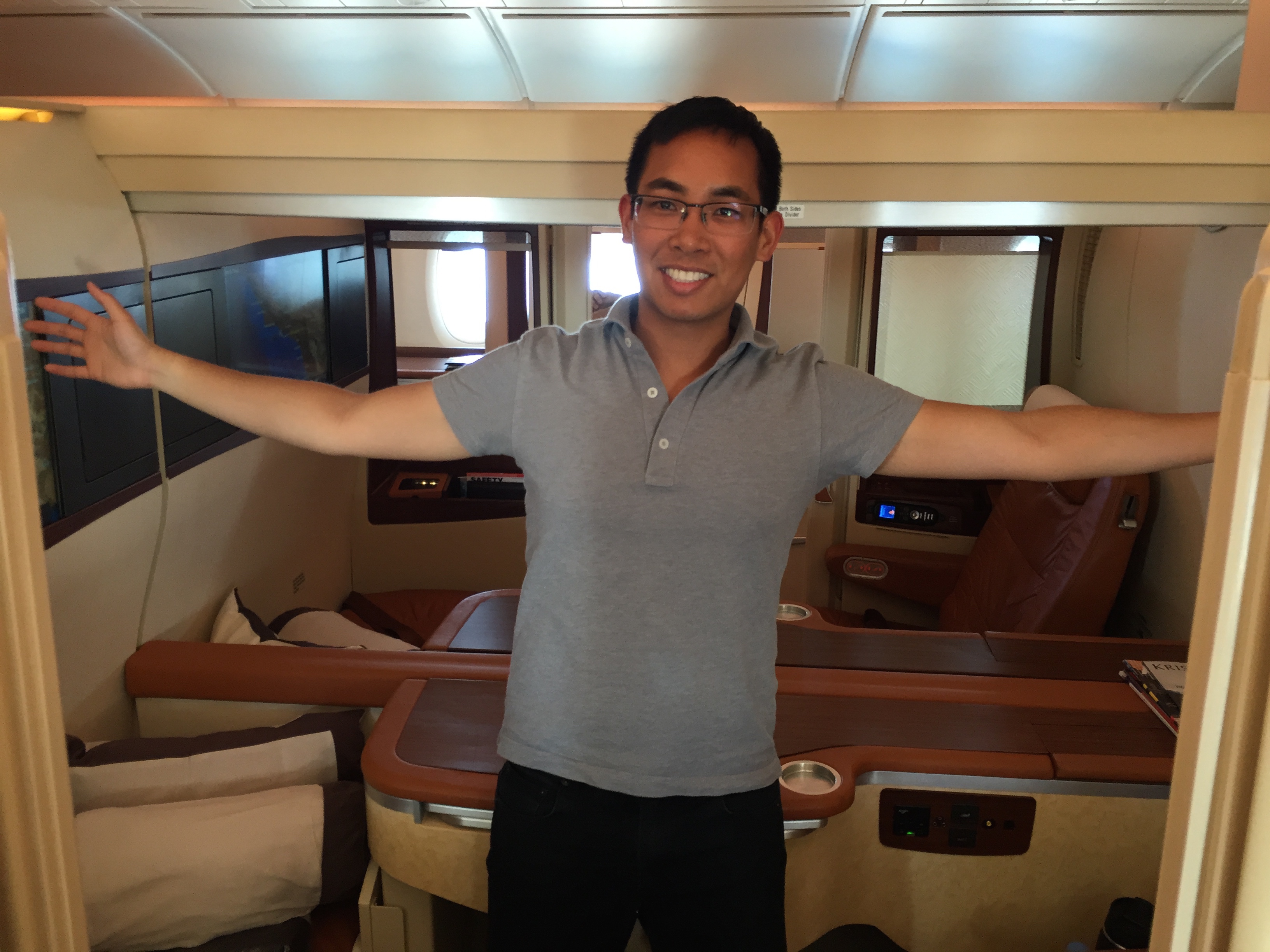
My "seat" in Singapore Airlines' Suites Class flight from L.A. to Tokyo.

I used points earned through credit card bonuses to fly in Singapore Airlines’ renowned Suites Class on a flight from L.A. to Tokyo.

Credit card bonuses are a huge part of how I’m able to travel so often so cheaply. Here are my thoughts on this tip:

  • If you have credit card debt, or have a FICO score below 650, don’t even try to do any of this. Your credit is precious, and if you’re not able to regularly pay off your bills, opening up multiple credit cards can be a slippery slope to exponential credit card debt.
  • Most credit cards that come with a relatively lucrative bonus offer (anything more than 50,000 points) have at least a minimum spend requirement of $3,000 over 3 months. Sometimes the minimum spend can be as low as $0 or as high as $10,000. In order to make sure I’m not overspending due to an artificial need to hit the minimum spend requirement on multiple cards, I apply for one credit card once every 90 days, working towards achieving the minimum spend on each card over the next three months.
  • Once you’ve hit a year on your credit card, either cancel it or downgrade it to a no annual fee credit card.

In the three years I’ve been “travel hacking” credit cards, I’ve signed up for 14 credit cards, closing or merging two of them. For the record, my current FICO score is 795. That’s out of a total 850. This has netted me several hundred thousand miles spread across a variety of programs. Currently, the top five programs in my “miles portfolio” look as follows:

  • United: ~150k
  • British Airways: ~125k
  • American Airlines: ~145k
  • Alaska Airlines: ~45k
  • Chase Ultimate Rewards: ~35k

And another ~30k points spread across a variety of programs including Starwood Preferred Guest, Korean Air, Delta, Qantas, Virgin America, Singapore Airlines, Hawaiian Air, and Hyatt.

I haven’t been able to burn the miles as fast as I’d like to due in large part to my next tip, but generally speaking, I’ll redeem my points as follows:

  • United miles for international flights in economy
  • British Airways points for short flights under 500 miles, domestic or international
  • American & Alaska for business or first class flight redemptions
  • Chase points to top off an account at a partner airline for an award

A lot has already been written on this topic, so I’ll try to keep my two cents as brief as possible on this.

For more information on this topic, I’d highly suggest following a few of my favorite blogs: OneMileAtATime, MillionMileSecrets, and TravelIsFree. If you prefer to listen to your content, I’d recommend listening to The Daily Travel Podcast and the Extra Pack of Peanuts Podcast. For those willing to go even further, I’d suggest browsing the forums on FlyerTalk. Loads of fun!

Tip #4: Follow the theflightdeal.com and create kayak.com alerts.
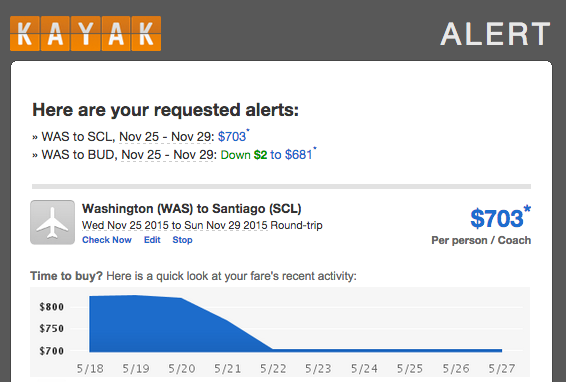
Some flights I've been tracking for Thanksgiving 2015.

Some flights I’ve been tracking for Thanksgiving 2015.

If you haven’t already, I encourage you to follow theflightdeal.com on Facebook. It’s basically a blog that regularly publishes cheap deals from your city. In the past, it periodically published “mistake fares,” which essentially were computer glitches in airlines’ reservations systems that offered fares at heavily discounted rates. Over the past three years, I’ve been able to snap up several amazing deals, including roundtrip flights from DC-Mumbai for $330, from DC – Abu Dhabi for $215, and from DC to Beijing in business class for $440.

While as of early May 2015 “mistake fares” are potentially a thing of the past due to changes in DOT regulations, the website still publishes pretty good deals. For example, earlier this year I went to Australia for the very first time on a roundtrip ticket from Philadelphia for $1,120, and will be heading to Sao Paulo from New York over Thanksgiving for only $592 roundtrip.

Besides theflightdeal, I also create alerts on kayak.com to various cities from where I’m currently based to track the fares of cities I’m interested in visiting. This is particularly useful when planning ahead, since most airlines begin selling tickets for flights up to 330 days before departure.

Tip #5: Consider hotel alternatives, like hostels, AirBnb or even couchsurfing.
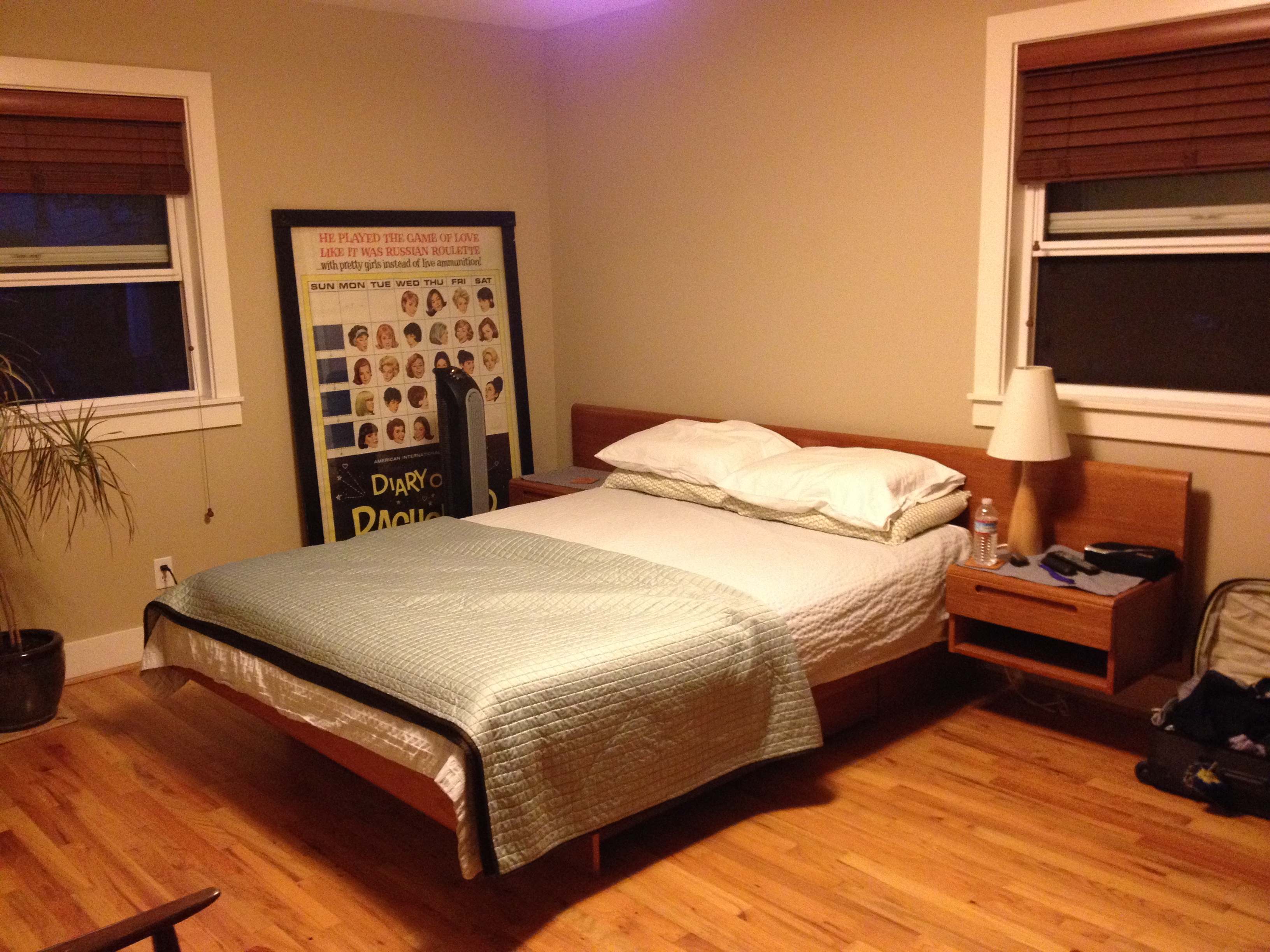
My AirBnb room during my stay in Portland in July 2014.

My AirBnb room during my stay in Portland in July 2014 during the World Domination Summit.

This is my last tip, and one that I think people often tend to forget. If you thought spending a couple hundred dollars for a plane ticket was expensive, depending on when and where you’re visiting, the total cost of a hotel can be several times the cost of your plane ticket. I frequently travel solo, and often opt to stay at hostels, not only to save on costs, but also to meet new people. I know that some people frown upon staying at hostels (the thinking goes: “Why should I share my bathroom or where I sleep with a stranger during my precious days of vacation?”), but in most large cities, many hostels offer private rooms with an en suite bathroom that are still cheaper than staying at a hotel.

Besides hostels, there’s an amazing community of people out on couchsurfing.com that connects travelers with locals willing to let you crash on their couch for a night (or more!) I’ve never done it (opting to stay a hostel in most cases), but a good friend of mine is a frequent host in the DC area, and is encouraging me to be a host or stay with a couchsurfer the next time I travel.

Lastly, when I’m not traveling solo, I’ll also look into staying at a place through AirBnb. The quality of your AirBnb can vary from pretty basic to luxurious, but having used AirBnb in Brooklyn, Portland, and Tokyo, my experiences have all been positive.

Conclusion:

So there you have it: my top five tips on how to travel more and spend less, and keep your full-time job. This post was much longer than I had expected, so I thank you if you made it this far. If you have any questions, feel free to leave a message in the comments, or send me a message at jrbilog@gmail.com. Thanks for reading!


Destination: National Museum of the American Indian

Standard

Today’s post caps off my visit to the Federal Center SW / Capitol South Metro station area a few weeks ago.

Earlier last month, I spent a Saturday afternoon exploring the Capitol South / Federal Center SW Metro station area. After grabbing some pizza at We The Pizza, I headed over to the Library of Congress and then the U.S. Botanic Garden. Before heading home, I stopped at one last place: the National Museum of the American Indian.

National Museum of the American Indian

Like most of the other buildings on The Mall, entry is free at the NMAI. From an architectural perspective, the NMAI is a stunning building to look at from the outside. To get a really good perspective of the building, you’ll have to look at it from afar. Here’s the building, viewed just off of the Independence Ave.

NMAI Entrance

The building’s north-facing facade reminds me of waves.

 NMAI Facade 

Based just off of viewing the building from outside, I thought the NMAI was going to be a massive building on the inside. Surprisingly, it wasn’t. When you enter the museum, you enter a massive atrium / performance area. During my visit, there was a demonstration going on which seemed to be related to sports and competition.

View the NMAI Calendar of Events

While other visitors were taking pictures of the demonstration, my eyes just couldn’t get over at how amazing the ceiling looked.

 Ceiling above the performance / demonstration area.

NMAI Ceiling 

The ceiling itself is supposed to be a representation of the sun and its rays, which for many Native American cultures, is an important symbol.

After watching the demonstrations for a bit, I decided to check out the rest of the museum. For some reason, I had thought that the museum was going to feature Native Americans from just the United States. However, the exhibits at the museum cover cultures throughout North and South America, including the Caribbean and Central America. 

It took me about an hour to explore the museum. For the most part, it was pretty underwhelming. Although some of the exhibits were interesting and taught me something new (i.e., that some Arctic cultures believe there are 8 seasons), I felt like the storytelling could’ve been done better. Rather than focusing on telling the stories of dozens of groups across the Americas, I think the museum would’ve probably been able to do a better job if they had chosen to focus on perhaps just the native cultures that belonged to just the United States.

That being said, there were some interesting exhibits such as the exhibit on Central America, which included some really cool artifacts, as well as clips of students explaining what archaeology means to them, and why they’re so interested in understanding the cultures and history of their country.

A painting in front of one of the exhibit rooms.

NMAI - Painting 

One of the statutes in the exhibit on Central America.

 NMAI - Statue from Central America

Flags of Native American nations in the United States.

 NMAI - Flags

Hours of Operation

Open Daily: 10:00 am – 5:30 pm

Tips & Conclusion

  • Although an impressive building from an architectural perspective, the exhibits at the NMAI seemed underwhelming.
  • If you’re short on time in DC, I would recommend skipping this museum.
  • If you’re hungry, check out Mitsitam Cafe, located on the ground level. While I didn’t eat anything here, friends have mentioned the cafe serves up some of the best food compared to the other food options available at museums on The Mall.

Getting to the National Museum of the American Indian

The entrance to the NMAI is a short five-minute walk from Federal Center SW Metro, which is located in Southeast DC, and is served by the Orange, Silver and Blue lines.

Destination: United States Botanic Garden

Standard

Last Saturday I spent exploring the Capitol Hill area. You can see that here: Library of Congress.

United States Botanic Garden

After the Library of Congress, I headed over to the U.S. Botanic Garden (USBG). Having grown up in Hawaii, where as a child I remember spending time with my grandpa working on his Macadamia Nut farm, or growing banana trees and corn in my parent’s backyard, I was eager to see what the USBG had to offer.

The USBG is composed of three parts: The Conservatory, The National Garden and Bartholdi Park (see map here). Given that it’s currently winter, there wasn’t much growing in both the Garden and the Park, both of which are outdoors. So, I spent most of my visit at The Conservatory. Here’s what I found:

The Conservatory, as seen from Independence Ave.

US Botanic Garden - Entrance

The Conservatory itself is divided into several rooms, but only a handful stand out. You’ll first enter the Garden Room.

Entrance Room - 1

Of the various rooms in The Conservatory, the Orchid Room was probably my favorite of them all.

Orchid Room - 1

Orchid Room - 2

This giant papaya tree was located in the Medicinal Plants room. Although I ate this all the time while in Hawaii, I’ve rarely had it since moving to the mainland, nor did I realize it’s a medicinal plant!

Papaya tree

There was also a room dedicated specifically for Hawaii! I had no idea that roughly a third of all endemic plants in the States are found in Hawaii.

Hawaii Room - 1

The Jungle Room, located in the center of the Conservatory, contains something pretty cool: a canopy walk. It’s pretty hot and humid in the Jungle Room, but not to the point that being inside felt unbearable.

Jungle Room - 1

Jungle Room - 2

Overall, I thought the USBG was a nice oasis from the winter. With that said, for some reason I imagined the Conservatory to be much larger. Additionally, maybe this is me just being overly detail-oriented, but the accompanying descriptions of the plants and rooms seemed really dated, which made me get a sense that the Conservatory hadn’t been updated in a while. Interestingly, they

Check out more reviews of the USBG on Yelp!

Hours of Operation

  • Conservatory: Open Daily, 10 am – 5pm
  • National Garden: Open Daily, 10 am – 5pm
  • Bartholdi Park: Open Daily, dawn to dusk

Getting There:

The U.S. Botanic Garden’s is a short 5-minute walk from the Federal Center SW Metro Station, located on the Blue, Orange and Silver Lines. The main entrance to The Conservatory at the U.S. Botanic Garden is located along Maryland Ave SW, across the Capitol Reflecting Pool. The National Garden is located adjacent to the Conservatory along Maryland Ave SW, and Bartholdi Park is located behind the Conservatory along Independence Ave SW.